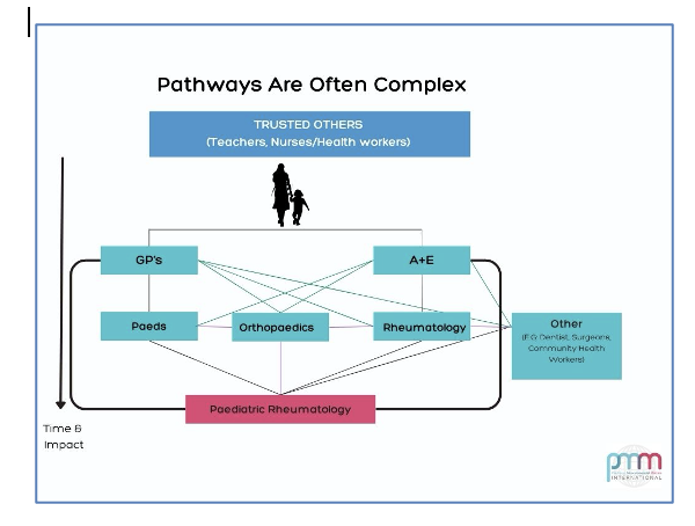


Care pathways
Children with Juvenile Idiopathic Arthritis (JIA) often have a complex pathway to care and may present in a variety of healthcare settings, including primary care, community services and emergency departments.
Common presentations include:
- Limp
- Functional difficulties, such as problems with walking, handwriting or participating in sport
- Joint pain and swelling
Younger children may not be able to clearly describe pain. Instead, they may present with a limp, regression of developmental milestones (for example difficulty walking or climbing stairs), or avoidance of activities they previously enjoyed.
Parents or carers may report that a child has become more “clumsy” or prone to falling. While these features are non-specific and may have other causes, a change in ability or function is important, and inflammatory joint disease should be considered.
When to escalate
- Persistent joint swelling or limitation of movement
- Functional decline or regression of skills
- Systemic features such as fever, weight loss or fatigue
- Significant pain, night pain, or refusal to weight bear
Early recognition and referral are essential to prevent joint damage and long-term complications.