

Juvenile Systemic Lupus Erythematosus
Juvenile Systemic Lupus Erythematosus (JSLE) is a rare multisystem autoimmune disease. It is more common in non-Caucasian populations, with a female predominance in adolescence, although in younger children the sex distribution is more equal.
Musculoskeletal involvement is common. The arthritis is usually polyarticular, affecting mainly the small joints, and pain may be prominent despite minimal visible swelling.
JSLE is a multisystem condition, and diagnosis is based on a combination of clinical features and laboratory findings.
Common clinical features
- Skin: malar (photosensitive) rash, alopecia, vasculitic rashes, Raynaud’s phenomenon
- Musculoskeletal: polyarticular arthritis (often small joints)
- Systemic features: fatigue, fever, weight loss, oral ulcers
- Serosal involvement: pleuritis or pericarditis
- Neurological features: headaches, seizures, psychosis
- Lymphatic and organ involvement: lymphadenopathy, hepatosplenomegaly
- Renal and cardiovascular features: hypertension, peripheral oedema, facial (periorbital) puffiness.
Laboratory findings
- Full blood count abnormalities: anaemia (may be haemolytic), leukopenia or lymphopenia, thrombocytopenia
- Biochemistry: elevated liver enzymes, elevated urea and creatinine, abnormal urinary sediment
- Immunological markers: reduced complement levels (C3 and C4), positive ANA, high-titre anti-dsDNA antibodies
- Other autoantibodies: anti-Ro/SSA, anti-La/SSB, anti-Sm, anti-RNP
- Antiphospholipid antibodies: anticardiolipin, lupus anticoagulant
Drug-induced lupus
A lupus-like syndrome may rarely be triggered by certain medications, including anticonvulsants, oral contraceptives and minocycline.
Management
The management of JSLE is complex and requires specialist supervision. Most children require corticosteroids and immunosuppressive therapy.
Additional treatments may be required depending on organ involvement, including antihypertensive therapy, anticoagulation (particularly in antiphospholipid syndrome), treatment for dyslipidaemia, and measures to protect bone health (e.g. calcium and vitamin D).
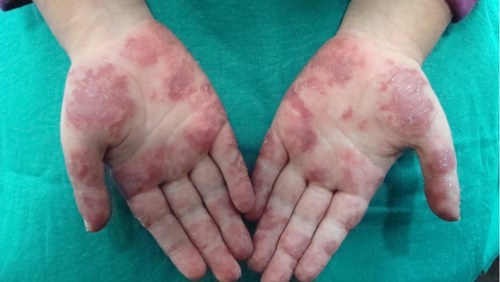
The photographs below show skin vasculitis in JSLE.