
Vasculitis
Vasculitis refers to a group of multisystem inflammatory diseases characterised by inflammation of blood vessels. These conditions are broadly classified according to the size of the vessels involved.
Features suggesting vasculitis in children and adolescents
Vasculitis should be considered when there are systemic features together with evidence of multiorgan involvement.
- Clinical features:
- Fever, weight loss, persistent fatigue
- Skin rash (e.g. palpable purpura, vasculitic urticaria, nodules, ulcers, oral ulcers)
- Neurological features (headache, mononeuritis multiplex, focal neurological deficits such as stroke)
- Arthritis or arthralgia, myalgia or myositis
- Hypertension, cardiac failure, unequal pulses
- Testicular pain
- Oliguria, haematuria, oedema
- Pulmonary infiltrates or haemorrhage
- Laboratory features:
- Raised inflammatory markers (ESR, CRP)
- Anaemia, raised white cell count, or eosinophilia
- Autoantibodies (e.g. ANA, ANCA)
- Abnormal urinalysis (blood and/or protein)
Common childhood vasculitides
The most common vasculitic conditions in childhood are Henoch–Schönlein Purpura (HSP) and Kawasaki disease (KD).
Henoch–Schönlein Purpura (HSP)
HSP is a common small-vessel vasculitis characterised by palpable purpura (raised rash), typically on the legs and buttocks, abdominal pain (may be associated with melaena), renal involvement (e.g. haematuria), and joint involvement (usually knees and ankles).
Joint symptoms are usually transient and resolve within days to weeks without long-term damage, although symptoms may recur.
Most children recover within 4 weeks, but relapses can occur and renal involvement may rarely progress to renal impairment.
Management is usually supportive, including NSAIDs for joint pain and corticosteroids for significant gastrointestinal symptoms.
Kawasaki disease (KD)
Kawasaki disease is an acute vasculitis of medium-sized vessels, typically affecting children under 5 years. It is important to recognise early due to the risk of coronary artery aneurysms and long-term cardiovascular complications.
Prompt treatment with intravenous immunoglobulin (IVIG) and high-dose aspirin significantly reduces this risk.
- Fever lasting more than 5 days
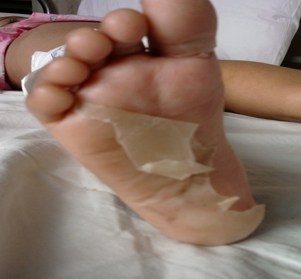
- Red palms and soles, followed by skin peeling after 10–14 days
- Widespread rash
- Bilateral non-purulent conjunctivitis
- Red lips, tongue and oral mucosa
- Cervical lymphadenopathy
Reactivation of the BCG scar at the vaccination site is a recognised and helpful clinical sign.
Clinical approach
Vasculitis should be suspected in any child with systemic illness and multi-organ involvement. Early recognition and prompt referral to specialist services are important to reduce the risk of organ damage and long-term complications.
The photograph below shows characteristic skin peeling in Kawasaki Disease