

Multiple joint arthritis
When a child presents with multiple swollen joints, infection (except for some forms of reactive arthritis) and trauma are less likely causes. In this context, a systemic or underlying condition is more likely and should be carefully considered.
The main conditions to consider include:
- Juvenile Idiopathic Arthritis (JIA) – a common cause of polyarthritis in children; however, malignancy (particularly leukaemia) must always be excluded
- Metabolic bone disease – such as osteomalacia or rickets
- Chromosomal conditions – for example Down syndrome–associated arthritis
- Inherited metabolic conditions – such as mucopolysaccharidoses, often associated with joint stiffness or contractures
- Multisystem inflammatory disease – including juvenile systemic lupus erythematosus, juvenile dermatomyositis, and vasculitis (these more often cause joint pain [arthralgia] than true joint swelling)
- Rheumatic fever – a reactive arthritis following streptococcal throat infection; uncommon in the UK but more prevalent globally, and typically causes a migratory (flitting) arthritis
- Post-viral arthritis – for example following rubella (which may cause widespread arthritis) or varicella/chickenpox (which may affect one or several joints)
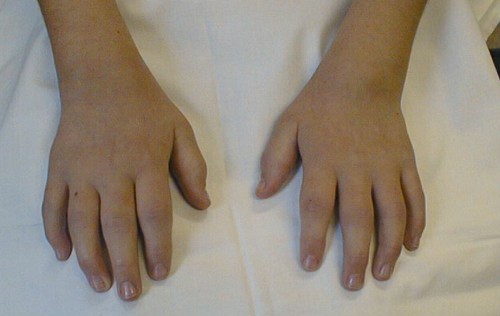
The photograph below shows polyarthritis affecting small joints of the hands and wrists (Juvenile Idiopathic Arthritis).